






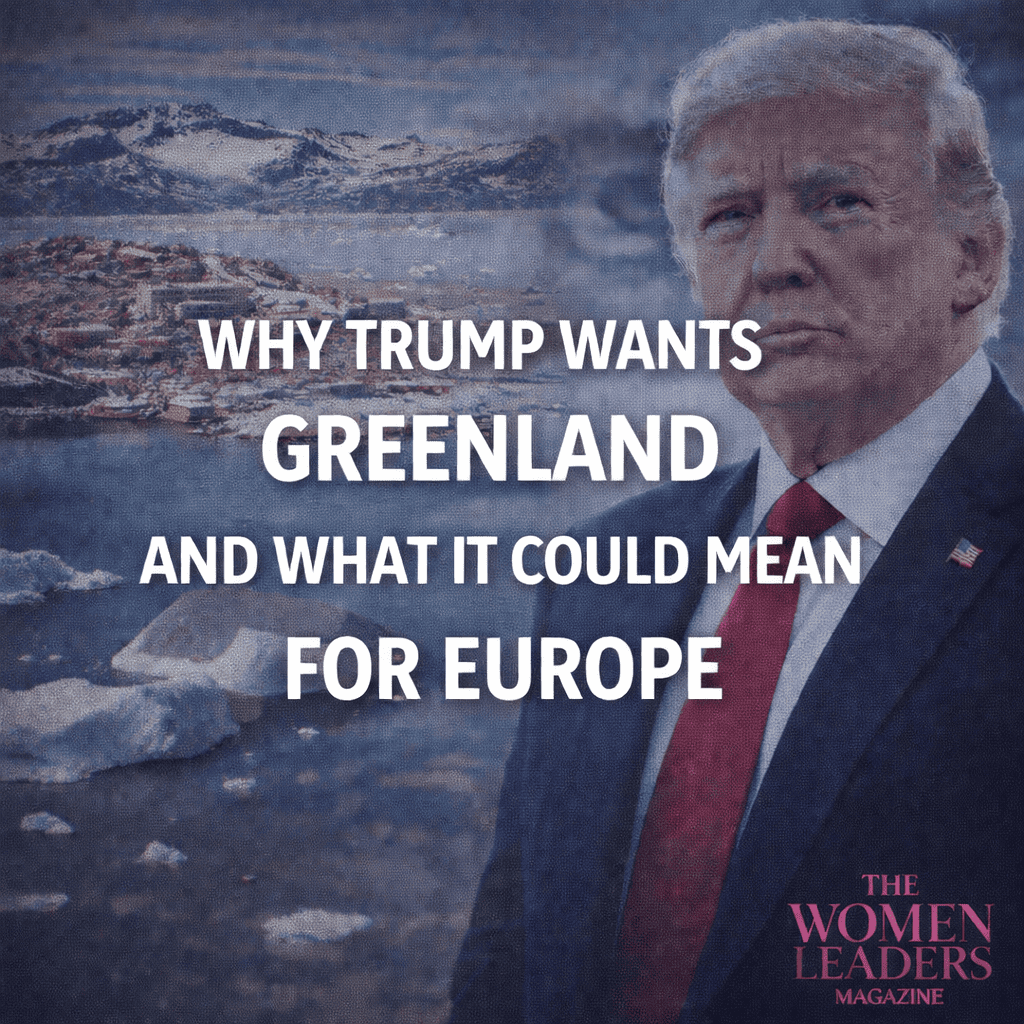



Why Trump wants Greenland and what it could mean for Europe has returned to the centre of transatlantic debate after renewed remarks from Donald Trump suggesting US control over the Arctic territory would serve American strategic interests. European leaders have responded with rare unanimity, rejecting any notion that sovereignty over Greenland is negotiable.
Greenland, a self-governing territory within the Kingdom of Denmark, occupies a strategic position in the Arctic, an area growing in geopolitical significance as climate change reshapes shipping routes and access to resources. Trump has framed his interest primarily around security, citing increased Russian and Chinese activity in the region. For Washington, the Arctic is no longer peripheral; it is becoming a core theatre of competition.
Yet security alone does not fully explain why Trump wants Greenland and what it could mean for Europe. The United States already operates under a long-standing defence agreement with Denmark and maintains a military presence at Pituffik Space Base, a key node for missile warning and space surveillance. Access to Greenland for defence purposes is therefore not constrained in practical terms.
This has led European analysts to question whether economic leverage plays a larger role. Greenland holds significant reserves of rare earth elements and other critical minerals essential for defence technology and clean energy transitions. While extraction remains complex and environmentally sensitive, control over future supply chains could offer a strategic advantage. In this context, talk of acquisition may function less as a literal proposal and more as a pressure tactic.
European reactions have been swift. Denmark’s government has warned that any challenge to Greenland’s status would violate international law, while Greenland’s leadership has stressed that decisions about the island’s future rest solely with its people. France and Sweden have publicly backed Danish sovereignty, framing the issue as one that touches the foundations of European territorial integrity.
The broader concern lies in alliance politics. Why Trump wants Greenland and what it could mean for Europe extends beyond the Arctic into the credibility of NATO itself. Any attempt by one member to assert control over another member’s territory would undermine the alliance’s core assumptions. Even rhetorical escalation risks weakening trust at a moment when unity is central to deterrence.
Some alternatives avoid confrontation. Europe could deepen structured cooperation on Arctic security, expanding joint surveillance, infrastructure investment, and intelligence-sharing within existing legal frameworks. On the economic side, coordinated EU–Greenland partnerships on responsible mineral development could reduce external pressure while preserving local control. (Speculation: formal Arctic burden-sharing arrangements may gain traction as competition intensifies.)
Ultimately, why Trump wants Greenland and what it could mean for Europe is less about geography than governance. The episode tests whether transatlantic relations can adapt to strategic competition without eroding the principles of sovereignty and consent that underpin European stability.

EU courts Gulf countries for free trade deal to protect European exports from global tariff pressures and deepen strategic partnerships with GCC states.
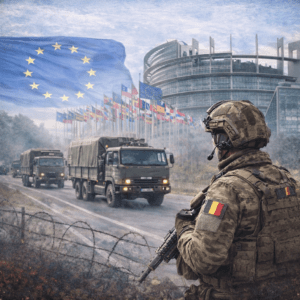
The European preference in military mobility plan gains support in the EU Parliament, aiming to prioritise EU infrastructure, suppliers, and control to strengthen defence readiness and strategic autonomy.


New analysis shows female employees in tech and finance AI-driven job losses could accelerate as automation targets roles dominated by women in analytics, compliance, and support functions.

A new Swedish trial shows how AI improves early detection of aggressive breast cancers by reducing interval cancer rates and supporting radiologist decision-making in mammography screening.


Subscribe
Fill the form our team will contact you
Advertise with us
Fill the form our team will contact you
Leave us a message