Imagine a chessboard where half the pieces have been undervalued for centuries—not because they lacked strategy, intellect, or agility—but because the game was rigged. That’s been the state of global leadership until now. In 2025, the board is shifting.
Corporate, political, and entrepreneurial arenas no longer tolerate exclusion as the status quo. And the results? Women-led organizations are proving capable but consistently more adaptive, ethically grounded, and economically resilient. Why? Because the question has shifted from “Can women lead?” to “Can we afford not to have them lead?”
The Data Is Clear—And It’s Compelling
Global management consultancy McKinsey’s 2024 Women in the Workplace report revealed that companies in the top quartile for gender diversity on executive teams are 33% more likely to outperform on profitability. But it’s not just about money—it’s about method.
Women in leadership consistently score higher in emotional intelligence, collaboration, long-term vision, and stakeholder trust—especially in crisis settings. These aren’t soft skills. In high-stakes boardrooms, they’re competitive advantages.
Consider New Zealand’s Jacinda Ardern or Nasdaq’s Adena Friedman. Their ability to balance decisiveness with empathy helped guide their institutions through pandemic-era volatility with clarity and calm. That model is catching on—not as an exception, but as the new expectation.
Leadership Rewired: Beyond Command-and-Control
Historically, leadership’s image was forged in a factory—structured, rigid, and hierarchical. But today’s leaders don’t need a megaphone but a pulse on complexity. Women thrive in this space because the “hero CEO” trope doesn’t bind them.
Instead, female leaders are reshaping norms through three patterns:
Relational Intelligence over Ruthlessness: Women-led teams report stronger psychological safety, higher retention, and deeper collaboration.
Contextual Problem Solving: They resist blanket policies, preferring nuanced decisions based on cultural, local, and interpersonal dynamics.
Sustainable Success Models: Women prioritize longevity over quarterly optics. ESG, DEI, and stakeholder balance are integral—not add-ons.
These shifts aren’t just stylistic—they’re strategic. The companies adapting to this model are winning the talent, market share, and innovation war.
Barriers Still Built Into the Blueprint
Yet, the corporate scaffolding hasn’t caught up. In 2024, only 10.4% of Fortune 500 CEOs will be women—and women of color? A paltry fraction.
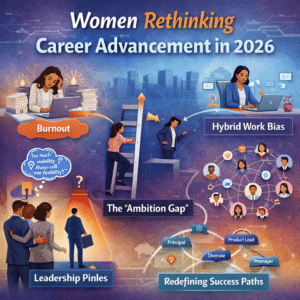
The issue isn’t a lack of competence; it’s compounded friction. Bias in performance reviews, exclusion from informal power networks, and outdated maternity policies remain systemic blockades.
Ask any mid-career female VP, and she’ll tell you: the glass ceiling isn’t above—it’s a maze. One that demands proof of ability over and over while others benefit from the doubt.
The Global Pulse: Where Change Is Gaining Speed
Progress isn’t uniform, but pockets of acceleration are emerging:
Nordic Nations: Norway mandates 40% gender parity on public boards. The result? Broader strategic input, more stable governance.
India: Female-led startups have increased by 23% since 2022 despite infrastructural hurdles. The fintech and health tech sectors are leading the surge.
UAE and Saudi Arabia: Surprisingly, new policies are encouraging women’s participation in corporate boards and public policy roles—a calculated economic move in their diversification agendas.
These aren’t symbolic moves. They’re growth strategies wrapped in policy, and countries ignoring this wave are falling behind fast.
The Future Isn’t Female. It’s Balanced.
“Women leadership” isn’t a genre. It’s a signal—of maturity, complexity, and modernity in organizational DNA. Companies with gender-balanced leadership don’t just look progressive—they think better, decide faster, and adapt smarter.
Want to future-proof your organization? Don’t just “empower” women. Share power—redesign decision-making frameworks. Rethink merit. Abolish tokenism. Make leadership a design, not a coincidence.