






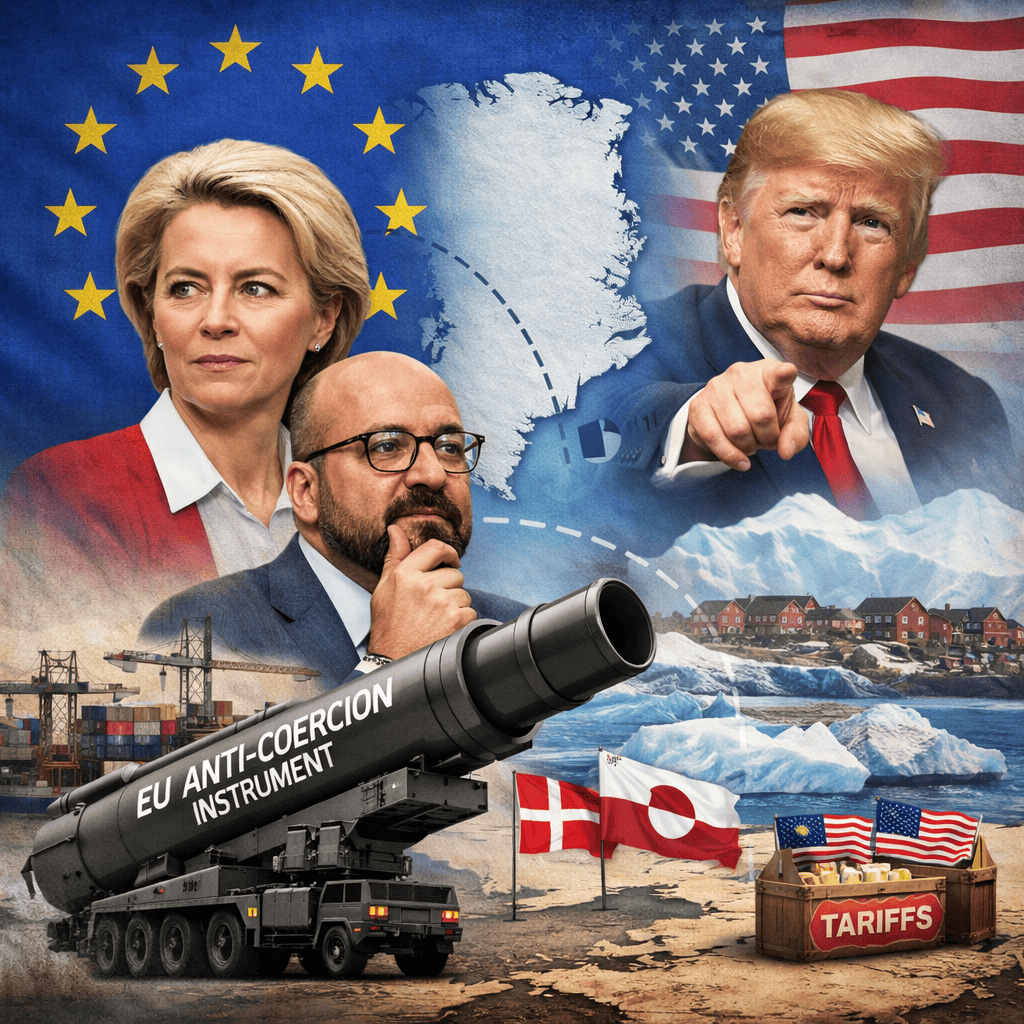



Pressure is building across EU capitals and inside the European Parliament to activate the EU anti-coercion instrument after US President Donald Trump warned of new tariffs unless Denmark agrees to negotiations linked to Greenland. For many in Brussels, tying trade penalties to territorial or strategic demands crosses a red line. The episode has turned the spotlight on the bloc’s most powerful trade-defense tool and forced a debate on whether Europe is ready to use it.
The EU anti-coercion instrument was created to deter foreign governments from using economic threats to extract political concessions from the EU or any of its member states. It allows the European Commission to investigate whether coercion exists and, if confirmed, propose countermeasures that go far beyond standard tariffs. These can include restrictions on access to the single market, limits on participation in EU public procurement, and measures affecting both goods and services.
Many lawmakers see the Greenland-linked tariff threat as a textbook case. Denmark, they argue, is being pressured on a matter of sovereignty through economic force. That framing has pushed calls for the Commission to formally open an assessment under the EU anti-coercion instrument, even if actual retaliation remains a last resort.
The mechanism is deliberately slow and legalistic. The Commission must first establish that coercion is taking place, a process that can take months. Member states then vote on whether to activate the instrument. Only after negotiations fail do countermeasures come into play. Supporters say this design ensures restraint and proportionality. Critics counter that delay weakens deterrence, especially against an administration that thrives on rapid escalation.
Behind closed doors, EU officials are already preparing technical options. These range from targeted tariffs on politically sensitive US exports to procurement bans that would shut American firms out of lucrative European contracts. The breadth of the EU anti-coercion instrument is what earns it the nickname “trade bazooka”—and what makes governments cautious about pulling the trigger.
Several capitals favour a twin-track approach: open a formal coercion assessment to signal resolve, while offering Washington a structured diplomatic channel. The logic is simple—credibility without immediate economic damage. By raising the cost of continued pressure, Brussels hopes to change the calculus in the White House without triggering a spiral that harms European industries and consumers.
There is also a strategic dimension. If the EU backs away from using the EU anti-coercion instrument in a case this visible, future threats may multiply. Smaller member states worry that failure to act now would invite similar tactics later, whether over defence, technology policy, or energy.
The choice is no longer theoretical. The Greenland dispute has become the first real stress test of Europe’s economic sovereignty doctrine. Whether the EU anti-coercion instrument remains a deterrent on paper or becomes an operational weapon will shape how the bloc responds to power politics in trade for years to come.

Spain slams US and Israeli strikes on Iran, with Prime Minister Pedro Sánchez warning of escalation risks and signalling a more independent Spanish foreign policy stance within the EU.
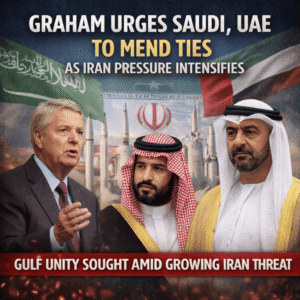
Graham urges Saudi UAE to mend ties as Iran pressure intensifies, warning that Gulf divisions weaken regional security and complicate U.S.-Iran diplomacy amid Yemen and Red Sea tensions.
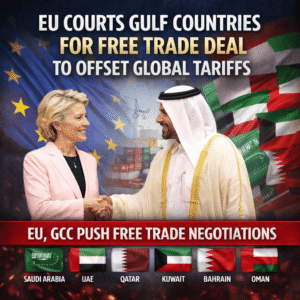
EU courts Gulf countries for free trade deal to protect European exports from global tariff pressures and deepen strategic partnerships with GCC states.
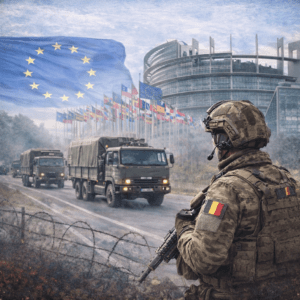
The European preference in military mobility plan gains support in the EU Parliament, aiming to prioritise EU infrastructure, suppliers, and control to strengthen defence readiness and strategic autonomy.


Subscribe
Fill the form our team will contact you
Advertise with us
Fill the form our team will contact you
Leave us a message