









Debate over TikTok’s impact on young audiences intensified after French President Emmanuel Macron questioned whether China is using TikTok to dumb down European children. His comments revived long-standing concerns about the differences between TikTok, used globally, and Douyin, its China-only counterpart.
Douyin and TikTok share a parent company and broad design similarities, yet their user experiences for children diverge significantly. In China, Douyin’s “youth mode” restricts under-14s to around 40 minutes of daily usage, blocks late-night access, and prioritises educational content such as science explainers, history mini-lessons, and civic education. These features have fuelled claims that China is using TikTok to dumb down European children by offering its own minors a more structured, learning-oriented digital environment.
Euronews’ fact-checking team created a teen profile on Douyin and found that the app emphasised practical and educational material far more than the international version. In contrast, TikTok’s European “For You Page” for the same age group surfaced more humour, beauty trends, lifestyle clips, and viral challenges. That contrast is central to the recurring narrative that China is using TikTok to dumb down European children through algorithmic design.
However, the investigation also highlighted nuance. TikTok in Europe increasingly pushes STEM-focused videos, digital learning initiatives, and optional educational feeds, particularly for users aged 13 and above. Many creators actively produce instructional content, which does circulate—though not with the consistency found on Douyin. This weakens the idea that China is using TikTok to dumb down European children through intentional information asymmetry.
The sharper divide lies in regulation. Douyin operates under strict Chinese content laws that enforce ideological boundaries and restrict content deemed inappropriate or socially destabilising. TikTok outside China functions under looser cultural controls but tighter child-safety and data-protection rules, especially in the EU. These differences reflect broader political and regulatory environments rather than confirmed evidence of a coordinated influence strategy.
Overall, the fact-check concludes that while Douyin provides a more curated, educational experience, TikTok’s global version leans toward entertainment. The claim that China is using TikTok to dumb down European children oversimplifies a more complex picture shaped by regulation, market incentives, and content-moderation systems.

Spain slams US and Israeli strikes on Iran, with Prime Minister Pedro Sánchez warning of escalation risks and signalling a more independent Spanish foreign policy stance within the EU.

Graham urges Saudi UAE to mend ties as Iran pressure intensifies, warning that Gulf divisions weaken regional security and complicate U.S.-Iran diplomacy amid Yemen and Red Sea tensions.
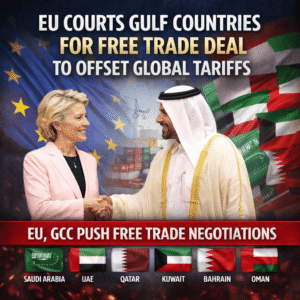
EU courts Gulf countries for free trade deal to protect European exports from global tariff pressures and deepen strategic partnerships with GCC states.
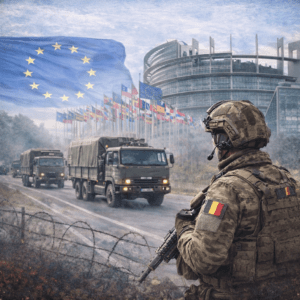
The European preference in military mobility plan gains support in the EU Parliament, aiming to prioritise EU infrastructure, suppliers, and control to strengthen defence readiness and strategic autonomy.
Subscribe
Fill the form our team will contact you
Advertise with us
Fill the form our team will contact you
Leave us a message