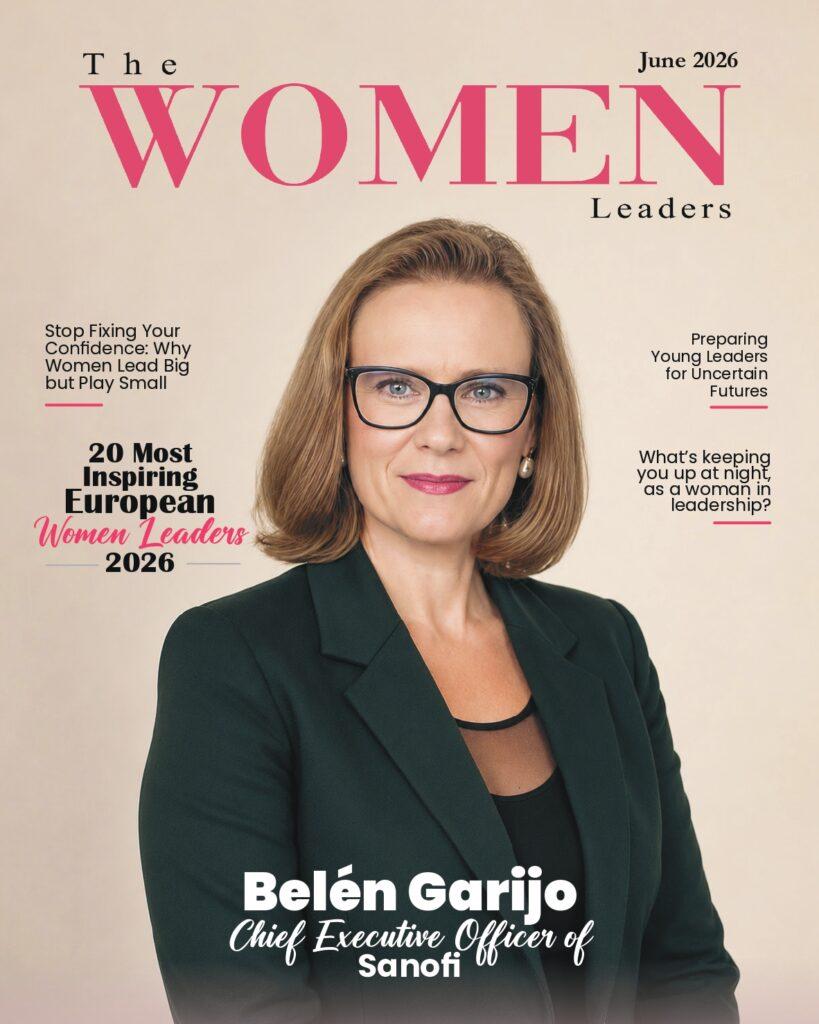
Most successful women leaders take pride in the qualities of their subordinates, not just their skills. Leadership is about both teams and individuals. South Korea has the highest percentage of female CEOs in the world, with 30% of its companies having female CEOs, followed by China with 9% of her and the EU with just 5%. Despite differences in numbers and statistics, women continue to emerge as leaders with qualities that are considered universal.
Determination:
Don’t give in to pressure, especially as it can make you suspicious of your female co-workers. Taking responsibility for one’s actions shows courage and self-confidence, whether it’s profitable or not.
Entrepreneurial and strategic:
Vision and a willingness to take risks to help CEOs not only lead their companies to success but keep them on track. Aruna Jayanthi, CEO of Capgemini India, said in 2012 she achieved a significant revenue increase of over 16% and she hired nearly 8,000 new employees at a time when many companies were slowly hiring. The strategic planning of an organization is the responsibility of top management. A clear vision and knowing what to expect from individuals and departments will help you use your resources efficiently and optimally.
Respecting Equality:
As a woman, you shouldn’t expect positive differentiation, according to the director of marketing at HPCL, Nisiva Sudeva (Oil Power Pack’s only full-time female director). The CEO of WellPoint, Angela Braly, also said: “The most important factor in determining whether you will succeed isn’t your gender, it’s you.”
Good at multi-tasking and communication:
Women make great leaders because they are naturally good multitaskers. The ability to respond decisively and quickly to different tasks and problems at the same time is a key component of successful leadership. Women are also naturally good at communication. Constant communication with the person in charge of each department enables smooth operation. A successful CEO must keep his team motivated and motivated, even in times of crisis.
High Emotional Intelligence:
Emotional intelligence – the ability to recognize and relate to one’s own and other’s emotions – has recently received increasing attention as important leadership behavior. This is more natural for women than for men.
Makes it look effortless:
Women are prodigious leaders because they are experts at making the impossible possible. It can also look effortless in good weather. Women are practical, resilient, and usually able to weather difficult situations with grace. Their outlook is fueled by a mix of sour tests and sheer courage. They see the world with courage and are able to piece the world around them together like an intricate puzzle.
Gender should not determine a person’s leadership qualities. Instead, organizations should assess leadership potential by assessing an individual’s strengths and personality traits. However, women are often not as encouraged to assume leadership roles as men, contributing to the one-sided power dynamics of the corporate environment. Women don’t always see their potential for success in leadership positions, but their potential and skills are undeniable.