









September 8, 2023: On Thursday, Paige drums Microsoft to support train cancer-spotting AI on huge image database.
Paige previously created an AI model for spotting the telltale signs of tumors among tissue samples by using over 1 billion images taken from about 500,000 pathology slides spanning multiple types of cancer.
Paige develops digital and AI-powered solutions for pathologists, which are doctors who carry out lab tests on bodily fluids and tissues to make a diagnosis. It’s a specialty that often operates behind the scenes and is crucial for determining a patient’s path forward.
“You don’t have cancer until the pathologist says so. That’s the critical step in the whole medical edifice,” Thomas Fuchs, co-founder and chief scientist at Paige, stated.
But despite pathologists’ essential role in medicine, Fuchs said their workflow has mostly stayed the same in the last 150 years. To diagnose cancer, for instance, pathologists usually examine a piece of tissue on a glass slide under a microscope. The method is tried and true, but if pathologists miss something, it can have dire consequences for patients.
As a result, Paige has been working to digitize the pathologists’ workflow to improve accuracy and efficiency within the specialty.
The company has received approval from the Food and Drug Administration for its viewing tool FullFocus, which allows pathologists to examine scanned digital slides on a screen instead of relying on a microscope.
Paige also built an AI model that can help pathologists identify breast, colon, and prostate cancer when it appears on the screen.

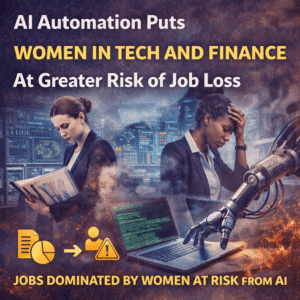
New analysis shows female employees in tech and finance AI-driven job losses could accelerate as automation targets roles dominated by women in analytics, compliance, and support functions.

A new Swedish trial shows how AI improves early detection of aggressive breast cancers by reducing interval cancer rates and supporting radiologist decision-making in mammography screening.

Capgemini sell US subsidiary Capgemini Government Solutions after backlash over ICE-linked services, highlighting governance limits and rising ESG pressure on tech firms.
Can Europe become the new Silicon Valley? EU leaders push unified legal frameworks and innovation funding, but scale, fragmentation, and capital gaps persist.


Subscribe
Fill the form our team will contact you
Advertise with us
Fill the form our team will contact you
Leave us a message