








To be a successful leader, you must improve your ability to navigate a world that is becoming increasingly complex and uncertain. You can teach an old dog new tricks, and you can reinvent yourself in the same way. The knowledge that underpins that perspective and reveals itself in leaders of all ages is that people’s ability to modify how they think, relate, and control themselves can be developed throughout their lives.
Leaders can’t rely on stable charts to navigate societal shifts, and they can’t hope to manage complexity by obsessing over the small stuff. Leaders must become accustomed to living in a condition of perpetual beta mode, in which they are always evolving. Leader that is sensitive and willing to stay on top of societal trends must renew their perspective to ensure the relevance of their organizations in a time when every skill has a half-life of around five years.
We need leaders who support learning and master quick, relevant, and autonomous learning as we seek to shift to a networked creative economy. There is no other approach to cope with the heinous problems we face. If work is learning and learning is work, then leadership should be focused on facilitating learning.
So far, recent surveys have indicated a major shift towards institutions built for scaled efficiency and toward institutions built for scalable learning. The trick is to discover new ways to connect, collaborate, and get work done faster, smarter and better through connecting and participating in knowledge streams that challenge our thinking.
We need smart tools to pick out the valuable information in a world that is overflowing with it. It necessitates that we examine and change the information sources on which we base our thinking and decision-making on a frequent basis. What’s important today is being connected to a knowledgeable network of people who can assist us in filtering useful information, exposing blind spots, and opening our minds.
Sharing is a collaborative process in which we pass on our knowledge, interact with others, go through versions, and learn from each other’s key ideas and observations. When we share on social media or speak in front of a group, we earn respect and trust by being relevant, thereby giving ourselves the chance to stand out from the crowd with enhanced information.
Everyone in any part of the organization can become a significant part of a learning ecosystem by seeking, perceiving, and exchanging information, listening to different frequencies, scanning the horizon, seeing trends, and making better decisions on a more informed basis.

The Westway Trust is a 23-acre estate in trust for the benefit of the community. Venu Dhupa is the leader who has brought a different vision to running this dual enterprise. . “Rather than thinking as a property company that deploys its resources for social goods, we are a social goods company that earns it’s income from property,” she explains.
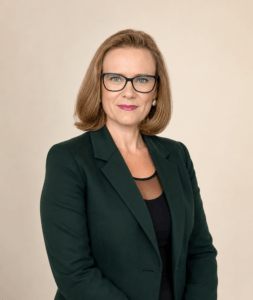
A Visionary Leading the Future of Medicine
In an era where healthcare is undergoing one of the most profound transformations in history, leadership demands far more than business acumen. It requires courage to challenge convention, compassion to prioritize patients above profits, and the foresight to anticipate the healthcare needs of tomorrow.
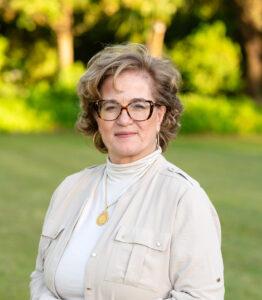
In a world increasingly defined by urgency, distraction, and constant connectivity, Simone Lopes chose to create something rare: a space for presence. Through the Refúgio of Quinta Nere Maitia, nestled in Portugal’s Ribatejo region, she has built more than a hospitality destination.
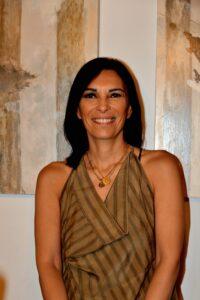
In an industry that connects billions of people across continents, cultures, and experiences, the infrastructure powering travel often remains invisible. Behind every hotel booking lies a complex web of systems, suppliers, and distribution networks working together in real time. For decades, that ecosystem has been fragmented, inefficient, and difficult to navigate.

Subscribe
Fill the form our team will contact you
Advertise with us
Fill the form our team will contact you
Leave us a message