







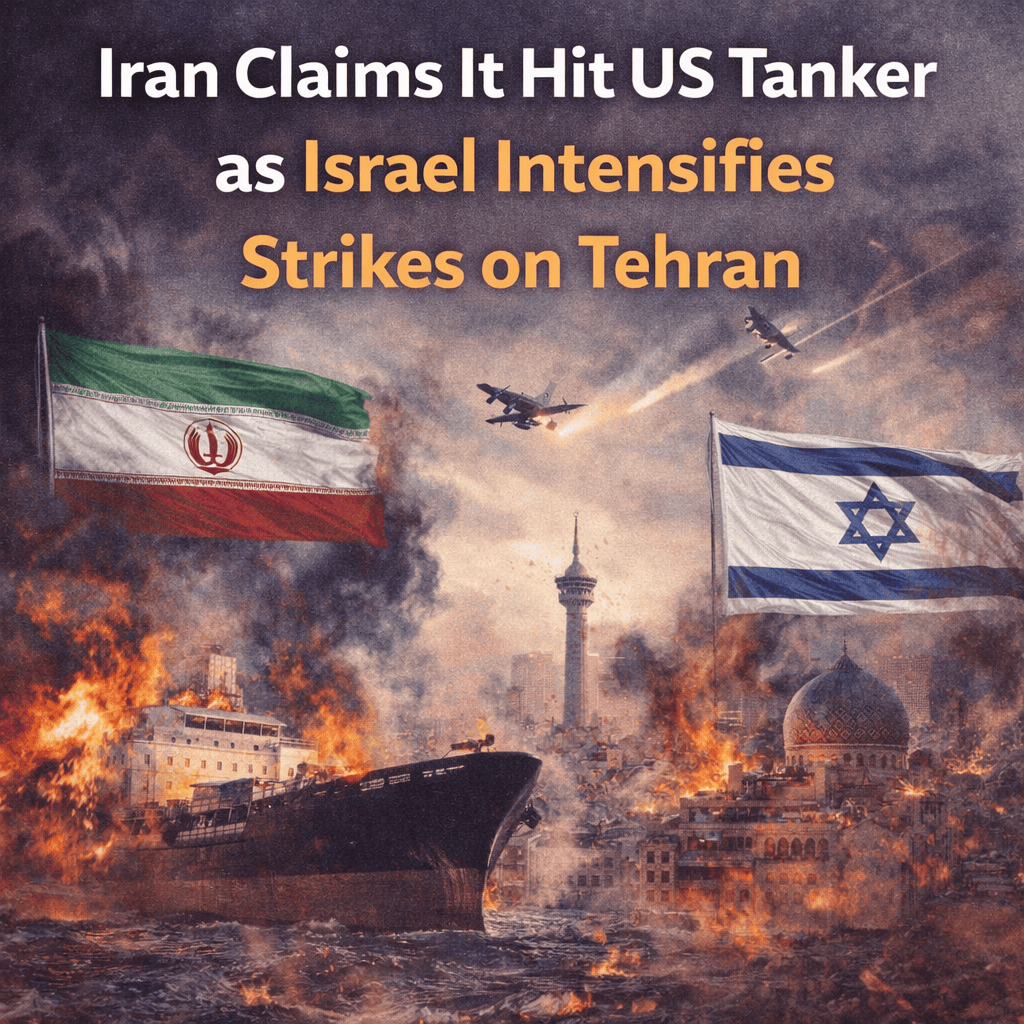



Iran claims it hit a US tanker as the confrontation between Iran and Israel escalated sharply, with Tehran announcing that its forces struck an American oil tanker in the Gulf while Israeli jets launched another wave of airstrikes targeting sites in Tehran. Iranian state outlets reported that the tanker was hit by a missile and caught fire, though independent confirmation of the attack was still limited in the early stages.
At the same time, Israel confirmed it had carried out new strikes on several locations in the Iranian capital. Israeli officials described the operation as part of a broader campaign aimed at weakening Iran’s military infrastructure and command networks. According to military statements, the latest attacks targeted facilities believed to be linked to missile operations and strategic defense assets.
The claim that Iran claims it hit a US tanker marks a significant escalation in the conflict because it extends hostilities beyond military targets to international energy infrastructure. The Persian Gulf and nearby maritime routes are critical for global oil transport, and any threat to shipping immediately raises alarms across energy markets. Shipping companies and insurers monitor these developments closely, as even unverified strike reports can raise risk assessments and insurance costs for vessels transiting the region.
Tensions have already disrupted maritime activity. Several shipping operators began reviewing routes after Iranian warnings about potential actions near the Strait of Hormuz. This narrow waterway is one of the world’s most important energy corridors, carrying a substantial share of global oil exports. If instability spreads across the area, fuel prices and freight costs could rise quickly.
Meanwhile, Israel’s continued strikes on Tehran demonstrate the widening scope of the confrontation. Iranian officials responded with further missile and drone launches toward Israeli positions, indicating that both sides are prepared for sustained military exchanges. Regional air defenses have remained on high alert, and neighboring countries are closely watching developments amid concerns that the conflict could expand beyond the two nations.
Diplomatic pressure is increasing as well. Governments across Europe and Asia have urged restraint while calling for immediate diplomatic engagement to prevent a wider war. Global markets, particularly oil and shipping sectors, are already reacting to the volatility created by the latest events.
As the situation evolves, the headline that Iran claims it hit a US tanker signals a shift toward targeting economic infrastructure alongside military objectives. Such actions increase the risk that the conflict could spread beyond direct combat zones, affecting global trade routes and energy supplies.

Spain slams US and Israeli strikes on Iran, with Prime Minister Pedro Sánchez warning of escalation risks and signalling a more independent Spanish foreign policy stance within the EU.
Graham urges Saudi UAE to mend ties as Iran pressure intensifies, warning that Gulf divisions weaken regional security and complicate U.S.-Iran diplomacy amid Yemen and Red Sea tensions.
EU courts Gulf countries for free trade deal to protect European exports from global tariff pressures and deepen strategic partnerships with GCC states.
The European preference in military mobility plan gains support in the EU Parliament, aiming to prioritise EU infrastructure, suppliers, and control to strengthen defence readiness and strategic autonomy.



Subscribe
Fill the form our team will contact you
Advertise with us
Fill the form our team will contact you
Leave us a message