








EU Trade Commissioner Maroš Šefčovič has bluntly declared that everything can be weaponized, using the recent collision between the Dutch state and chipmaker Nexperia as a key example of how trade and industry risks are shifting beneath our feet. In an exclusive interview with Euronews, Šefčovič argued that Europe now faces a reality where critical dependencies—on chips, minerals, logistics, and manufacturing—can be leveraged as strategic tools.
The controversy erupted when Dutch authorities sought to seize controlling stakes in Nexperia, citing national security threats. China responded by halting exports of crucial components to European firms—demonstrating to Šefčovič that indeed, everything can be weaponized, the EU trade chief warned. The interplay of regulatory decisions, trade flows, and geopolitical counter-measures points to a new kind of economic warfare.
Šefčovič says the European Union must evolve its industrial and trade frameworks accordingly. The old logic of lowest-cost sourcing and lean supply chains is insufficient. Instead, he proposes several structural reforms rooted in the principle that everything can be weaponized. These include mandatory stockpiles of strategic technologies, diversification of sourcing, real-time supply-chain monitoring, and an EU-wide export-control regime for sensitive items.
Some analysts remain sceptical, pointing out that building a resilient alternative to China-centred supply networks is a decade-long project. Still, the message is clear: everything can be weaponised, EU trade chief, and the EU’s policy design must reflect that shift. The Nexperia episode may be just the start.
Speculatively, if firms fail to adapt, Europe could see a new category of “supply-chain injury” that rivals physical damage in its impact on economies and political stability.

Spain slams US and Israeli strikes on Iran, with Prime Minister Pedro Sánchez warning of escalation risks and signalling a more independent Spanish foreign policy stance within the EU.
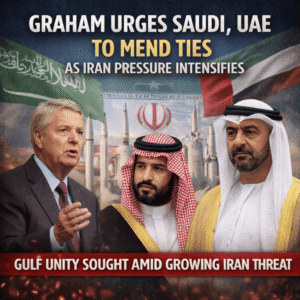
Graham urges Saudi UAE to mend ties as Iran pressure intensifies, warning that Gulf divisions weaken regional security and complicate U.S.-Iran diplomacy amid Yemen and Red Sea tensions.
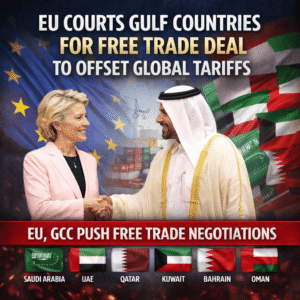
EU courts Gulf countries for free trade deal to protect European exports from global tariff pressures and deepen strategic partnerships with GCC states.
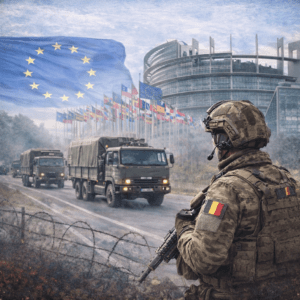
The European preference in military mobility plan gains support in the EU Parliament, aiming to prioritise EU infrastructure, suppliers, and control to strengthen defence readiness and strategic autonomy.

Subscribe
Fill the form our team will contact you
Advertise with us
Fill the form our team will contact you
Leave us a message