






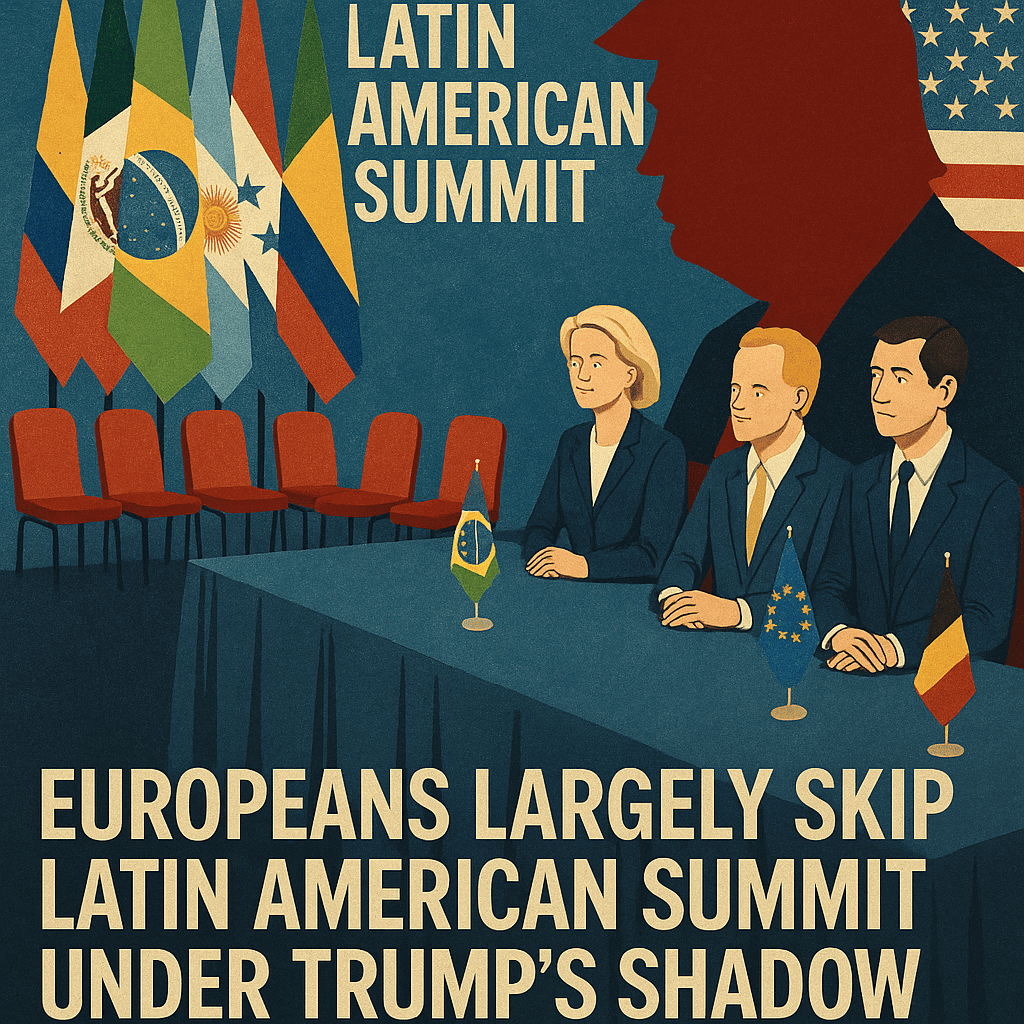



Several top European leaders have chosen to skip the Latin American summit, marking a significant setback for transatlantic cooperation. The EU-CELAC Summit in Santa Marta, Colombia, saw noticeably low European attendance, as political tension and shifting diplomatic priorities cast a long shadow over the event.
The decision to skip the Latin American summit was primarily influenced by the growing uncertainty surrounding U.S. foreign policy under Donald Trump. Many European governments reportedly view the summit as politically compromised due to Washington’s renewed dominance in Latin American affairs. According to diplomats, this dynamic has made it difficult for Europe to engage as an equal partner in the region.
European Commission President Ursula von der Leyen and German Chancellor Friedrich Merz were among those absent from the gathering. While official statements cited scheduling conflicts, insiders say the cancellations reflect concerns about the summit’s shrinking relevance and the diplomatic friction it represents. The European delegation was comprised mainly of mid-level officials—an unusual move for a forum intended to foster trade and cooperation between Europe and Latin America.
The EU’s reluctance to fully engage comes at a delicate moment. Brussels is working to strengthen partnerships through its Global Gateway initiative and to finalize a long-pending trade deal with Mercosur. Yet, the decision by multiple leaders to skip the Latin American summit sends a message of hesitation at a time when China and Russia are expanding their footprint across Latin America.
Analysts warn that the absence of high-level European participation could weaken the EU’s influence in a region critical for raw materials, renewable-energy cooperation, and strategic geopolitical balance.
Unless Europe re-energizes its outreach—perhaps through digital diplomacy forums, green transition partnerships, and bilateral trade missions—the decision to skip the Latin American summit may mark more than a diplomatic snub. It could signal a deeper strategic retreat from a region where influence is rapidly shifting away from the West.

Spain slams US and Israeli strikes on Iran, with Prime Minister Pedro Sánchez warning of escalation risks and signalling a more independent Spanish foreign policy stance within the EU.
Graham urges Saudi UAE to mend ties as Iran pressure intensifies, warning that Gulf divisions weaken regional security and complicate U.S.-Iran diplomacy amid Yemen and Red Sea tensions.
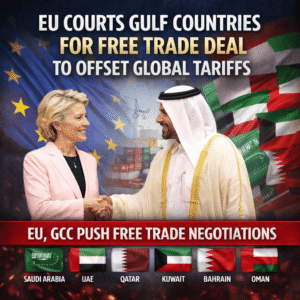
EU courts Gulf countries for free trade deal to protect European exports from global tariff pressures and deepen strategic partnerships with GCC states.
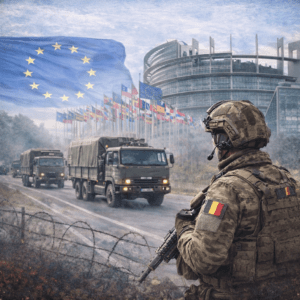
The European preference in military mobility plan gains support in the EU Parliament, aiming to prioritise EU infrastructure, suppliers, and control to strengthen defence readiness and strategic autonomy.


Subscribe
Fill the form our team will contact you
Advertise with us
Fill the form our team will contact you
Leave us a message